
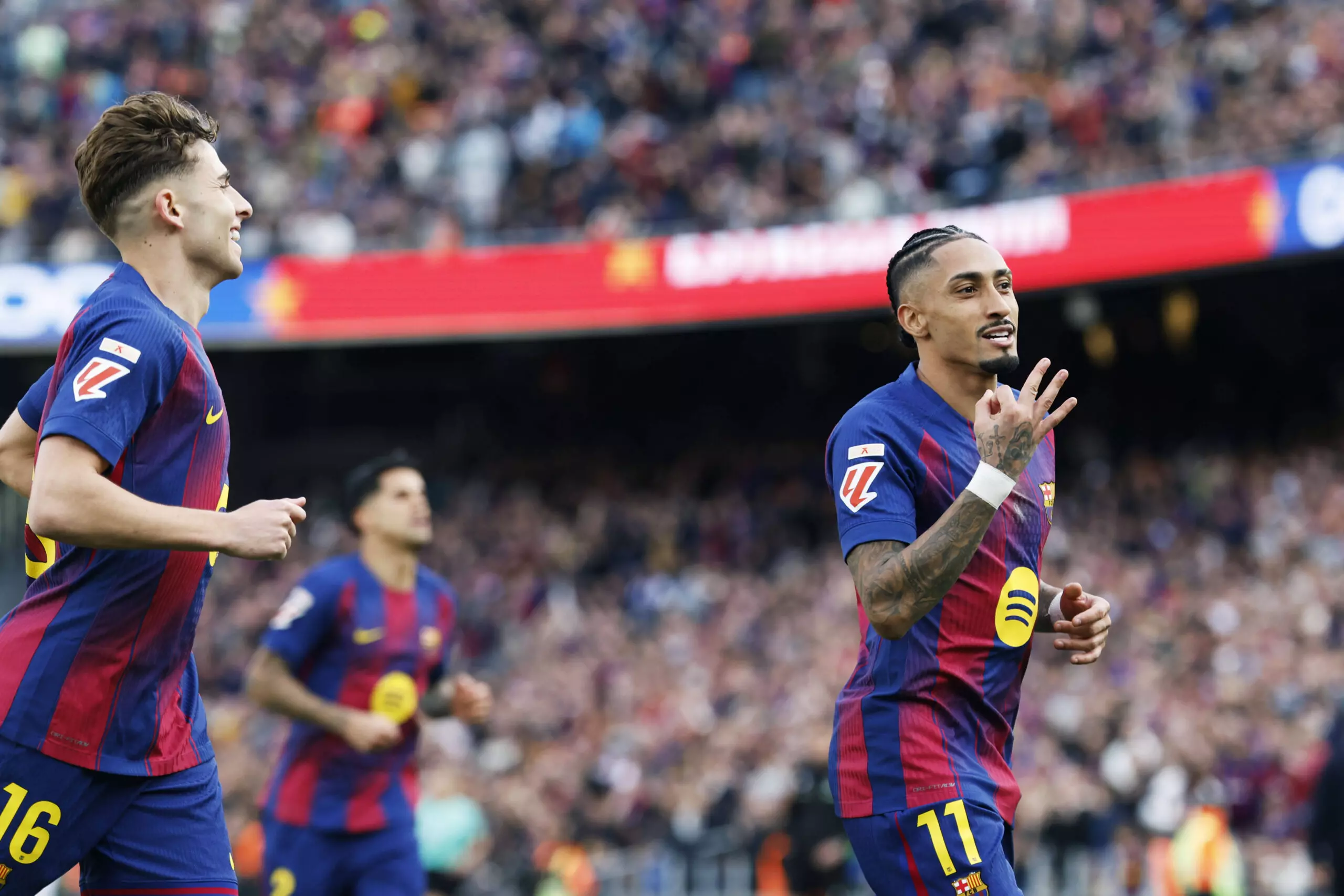
Barcelona’s start to the 2026/27 season has already produced plenty of excitement, with the Catalan giants showing a sharp attacking edge and an early desire to set the pace across all competitions. A major part of that momentum has been the Raphinha form, as the Brazilian attacker has started firing on all cylinders and making his presence felt throughout the team.
What makes his contribution even more intriguing, however, is the way his position has evolved, with Raphinha now operating more as a false nine and centre forward. The role seems to suit him perfectly, letting him attack dangerous areas more often and giving him more freedom to influence games from central positions. This new setup provides the perfect backdrop to explore the Raphinha form, from the tactical shift that has brought out his best qualities to the goalscoring impact that has turned him into a genuine goal machine for Barcelona.
Raphinha Form: From Winger To Barcelona’s Unexpected Number Nine
The Raphinha form has been driven by his new role in Barcelona’s team under Hansi Flick, bringing a new side to the Brazilian’s game. That change has come largely from Barcelona’s need for a central striker after the summer departures, creating the opening that has now moved Raphinha into the number nine role. The exits of Robert Lewandowski and Ferran Torres to Paris Saint-Germain left a big gap in Barca’s attacking line, removing their primary goalscoring outlet from the centre.
Julian Alvarez was the clear transfer target to replace the departing forwards, but Atletico Madrid’s refusal to sell forced Barcelona to look for alternative solutions. That situation led them to sign Gabriel Jesus from Arsenal, but his arrival was viewed as additional attacking cover rather than a guaranteed first-choice number nine.
With no traditional striker available, Hansi Flick turned to an in-house option in Raphinha instead of waiting for another conventional forward or making excuses. His intelligent movement, intense pressing, clinical finishing, and ability to operate between the lines made him the unexpected but logical choice. What initially appeared to be a shortfall at the number nine position has instead unlocked a new level of Raphinha form, producing goals from all angles.
Flick Has Unlocked A Different Side Of Raphinha
That unexpected success in the central role has been greatly influenced by how Flick has unlocked a different style and ability in Raphinha. The Raphinha tactical role is now more than just a change in his position on the team sheet, as it has defined the Brazilian’s duties across all phases of play.
Having mostly played as a winger in the 2025/26 season, Raphinha has now spent the majority of his minutes so far this campaign leading the line, underlining the scale of the tactical change. That central starting position, however, has not taken away his natural qualities as a wide attacker. He starts centrally but still retains the opportunity to move into wider channels, combining the presence of a striker with the mobility of a wide attacker.
The Raphinha tactical role now allows him to roam around rather than stay fixed as a traditional target man, which plays to his strengths and abilities. That freedom also extends to Barcelona’s work without the ball, as he now presses with intensity and speed from the frontline, making him an important part of the team’s defensive work when out of possession. As a result, Flick has transformed Raphinha from a wide player into a more complete forward capable of creating, pressing and finishing at the highest level.
Raphinha’s Movement Is Making Him Almost Impossible To Contain
That increased freedom has naturally made the Raphinha tactical role even more difficult for opposition defenders to handle, which has contributed to his sensational goalscoring form. Raphinha now constantly shifts between the opposition centre backs, drops into midfield to link play and times runs into spaces behind the defensive line. This movement leaves opposition centre backs stuck between the decision of following him into deeper or wider areas or holding their positions and risking being exposed.
That hesitation then creates gaps for Barcelona’s other attackers to exploit, opening clear avenues and creating multiple goalscoring opportunities. At the same time, the precision of his arrivals into the penalty box has been unsettling defences, while his intelligent movement is connected to Barca’s ability to play penetrative through balls and generate clear-cut chances. Rather than limiting Raphinha’s movement, the number nine role has actually provided him with more freedom to identify and attack defensive gaps across the pitch, creating an incredible level of goal contributions.
YOU MAY ALSO LIKE: Is The Vinicius Junior Form Affecting Real Madrid?
The Number Nine Role Has Turned Raphinha Into A Ruthless Finisher
All that movement has now translated into the Raphinha form, with the number nine role turning him into a clinical finisher. The central role places him in higher-quality areas more often, giving him more dangerous and clearer opportunities in front of goal. The Raphinha form now includes 14 goals and three assists in eight matches across all competitions so far this season. With 12 goals alone in La Liga, he remains the highest goalscorer, highlighting his incredible form in the early stage of the season and how he is thriving in his new number nine role.
That improvement is also connected to the quality of chances being created for him, which are now closer to goal compared to previous seasons playing as a winger. Operating centrally now brings Raphinha closer to attacks, crosses, cutbacks and through balls while also putting him in more advantageous positions inside the box. His two back-to-back league hat tricks provide the best illustration of how his new role has rapidly translated into ruthless goalscoring output.
Barcelona May Have Solved Their Striker Problem Without Buying A Striker
That goalscoring output is now changing the conversation around the club’s need for a traditional striker, with the Raphinha form as Barcelona’s new number nine becoming increasingly difficult to ignore. The Brazilian, who was deployed in that position due to the failure to find a capable replacement for the strikers who departed in the summer, is now thriving in the position outright.
More importantly, Raphinha has brought a fluid attacking structure as a number nine, which has made Barcelona difficult to defend and contributed largely to Barca scoring 36 goals in just eight matches across all competitions. That means the Raphinha form currently suggests Barca may have solved their striker problem through his new position, but his consistency in the role across the full season still remains to be seen, especially when teams start sitting deeper and denying him central spaces. For now, however, the unexpected switch from winger to number nine has given Barcelona another attacking dimension and turned Raphinha into one of the most dangerous players in their early-season campaign.
Extra Time Note
The Raphinha form has completely changed the conversation around Barcelona’s striker situation. His move from the wing into the number nine role has given him more freedom to attack dangerous areas and has produced 14 goals and three assists in eight games. The biggest question now is whether he can maintain this level when opponents start sitting deeper and limiting the spaces he has been using. Barcelona will also need to manage the physical demands of the role across a full season.
For now, Flick appears to have found an unexpected solution to Barcelona’s striker problem, with Raphinha’s new role becoming a major reason behind their strong start.
More La Liga News:
Barcelona vs Real Madrid: Who Has Started The 2026/27 Season Better?
Fermin’s Barcelona Story: From Potential Transfer To Important Midfield Figure Under Hansi Flick